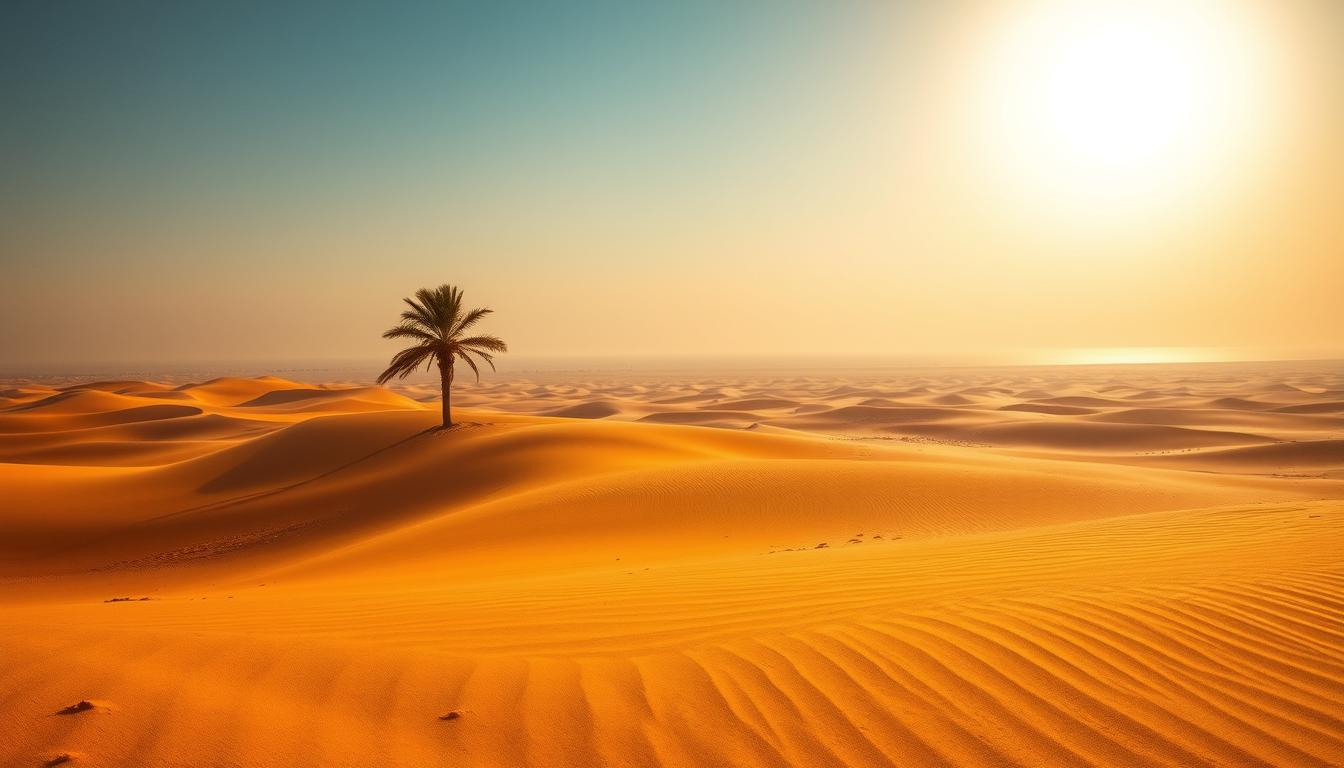
Imagine the vast, golden sands of the Dubai desert under a rising sun. Its warm glow wakes the land. Mornings offer a cool whisper, but the scene changes quickly. The desert turns into a heat furnace. How hot does it get? Knowing the extreme heat is key for adventurers. Summer can see temperatures above 104°F (40°C), sometimes hitting 111°F (44°C). Despite the heat, dune buggy rides and camel treks can be fun. You just need to know how to prepare. Learn about the Dubai desert’s temperature changes to enjoy your adventure fully.
When night falls, the desert cools off significantly. This shift is a refreshing change from the daytime heat. These drastic changes show the desert’s beauty and power. Knowing the Dubai desert’s weather improves your adventure and keeps you safe.
Key Takeaways
- Daytime temperatures in the Dubai desert can exceed 104°F (40°C) during summer.
- Mornings and evenings bring much cooler conditions, ranging from 57°F to 77°F (14°C to 25°C).
- Understanding desert temperature fluctuations is vital for your outdoor activities.
- Heat and low humidity create challenging conditions, especially in peak summer.
- Being prepared allows you to enjoy experiences like dune buggy tours more comfortably.
Understanding the Dubai Desert Temperature
The Dubai desert’s climate can be pretty extreme. Visitors should understand how temperatures change throughout the year. From the intense summer heat to cooler winter months, knowing this can make your time there better.
Average Temperature Ranges
The average temperature in Dubai’s desert changes a lot during the year. In winter, it can get as cool as 60°F (16°C) at night, which feels nice after the day’s heat. Summer, however, can get hotter than 120°F (49°C), making it tough to do things outside.
Peak Summer Temperatures in the Dubai Desert
July and August are the hottest months in the Dubai desert. Temperatures often go over 110°F (43°C) during the day, making the heat even more intense. It’s best to plan any outdoor adventures carefully to stay out of the hottest part of the day.
Winter Weather Patterns
Winter changes the temperature of the Dubai desert dramatically. Days are mild, with temperatures in the mid-70s°F (about 24°C), and nights cool down to the mid-50s°F (about 13°C). This cooler weather is perfect for exploring the desert. Many people find winter an ideal time to visit.
How hot is Dubai desert?
In the Dubai desert, heat is intense. Humidity and the heat index are key to feeling the real temperature. Summer temperatures in the desert can get very high. Still, humidity usually stays low then. However, when humidity goes up at certain times, the heat feels even worse.
Humidity and Heat Index Explained
The heat index measures how hot it really feels, combining temperature and humidity. It shows the heat we feel, which can be much hotter than the actual air temperature. Even when the desert cools at night, high humidity can make it feel stuffy.
Staying hydrated is crucial when exploring the desert. Take breaks in the shade if you’re doing activities like sandboarding or desert safaris. For tips on what to bring on such trips, here’s a useful guide.
Dubai Desert Climate: An Overview
The Dubai desert has a unique climate, mainly due to its dry conditions. You’ll find sandstorms and very high temperatures during summer. In the desert, temperatures vary greatly between day and night. This info is key for outdoor activity planning in Dubai.
Characteristics of the Arid Climate
Summer in Dubai extends from May to September. These months bring long days full of sunlight and intense heat. However, cooler months from October to April offer a break. This makes it a good time for outdoor activities.
Impact of Climate on Outdoor Activities
The climate greatly affects what you can do outside in the Dubai desert. Morning safaris are popular because of the cooler temperatures. In cooler months, activities like camel rides and BBQ dinners draw people. It’s a time for both tourists and locals to enjoy.
Seasonal Changes and Their Effects
Seasonal changes shape the activities available in Dubai. The hottest months are perfect for adventurous dune buggy tours. As it gets cooler in October, outdoor activities become more enjoyable. For tips on what to pack for a desert adventure, check out this packing guide.
Conclusion
Knowing how hot Dubai’s desert can get is key if you want to fully enjoy this amazing area. With extreme summer temps and certain humidity levels, you’ll find this info very useful. It helps you plan fun desert activities, like sandboarding or camel rides, better.
The desert’s unique climate means you can look forward to great experiences all year. When the sun sets, the desert cools down. This makes it perfect for activities like safaris. And with DREAM LAND ADVENTURE TOURISM LLC, you can explore any time, knowing you’re well-informed about the weather.
Planning with the weather in mind makes your travels even better. You’ll feel more comfortable as you discover stunning views. Call DREAM LAND ADVENTURE TOURISM LLC at +971 52 440 9525. Start an amazing desert adventure that’s filled with endless excitement.
FAQ
How hot does the Dubai desert get during the summer months?
During the summer, the Dubai desert can get extremely hot. Temperatures often go beyond 120°F (49°C) in July and August. It’s among the hottest places on Earth.
What is the average temperature range in the Dubai desert?
The Dubai desert sees a wide range of temperatures. In winter nights, it drops to about 60°F (16°C). But in summer days, it can soar above 100°F (38°C). This shows a big change throughout the year.
How does humidity affect the heat index in Dubai’s desert?
Even with the high temperatures, low humidity makes the summer bearable. Yet, when humidity increases, the heat feels much more intense. It’s crucial to drink lots of water.
What are the typical winter weather patterns in the Dubai desert?
The winter in the Dubai desert brings cooler weather. Nights get down to the mid-50s°F (around 13°C). Daytime temperatures reach the mid-70s°F (around 24°C). This weather is great for being outside.
How does the arid climate of Dubai affect outdoor activities?
Dubai’s dry climate means hot summers and cool winters. This weather affects when it’s best to do things like camel rides and night BBQs. It helps plan for safe and fun times outdoors.
What are the seasonal changes in Dubai’s desert and how do they impact activities?
In Dubai’s desert, seasons change what you can do. Winter is perfect for camel rides and safaris. But summer brings the excitement with things like dune buggy tours. It shows how seasons guide adventure times.