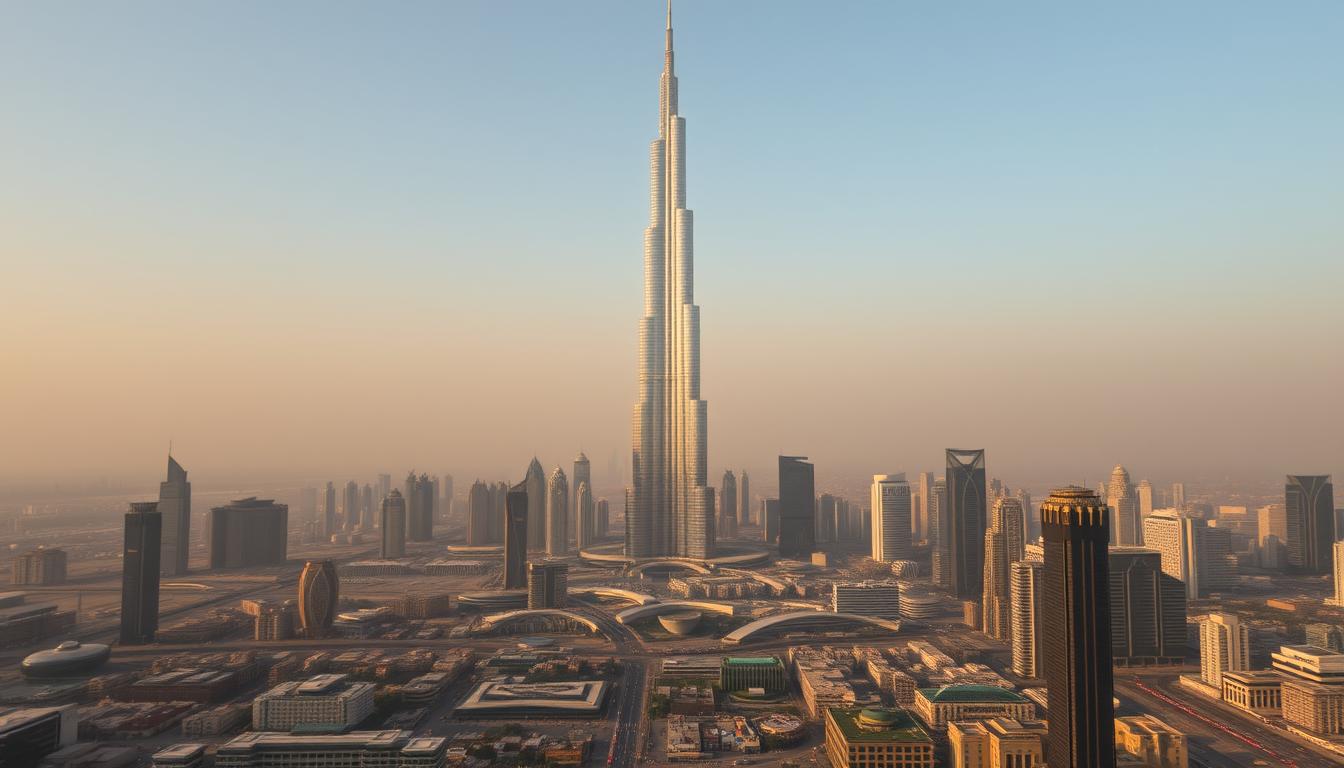
Standing at the base of the immense Burj Khalifa, you’re struck by its elegance against the sky. Originally known as Burj Dubai, this icon is more than engineering genius. It symbolizes the UAE’s identity and leadership strength.
The shift from Burj Dubai to Burj Khalifa reflects resilience in tough times. It reveals the deep stories of this lively country.
Key Takeaways
- The Burj Khalifa was originally named Burj Dubai.
- The name change reflects significant political events in the UAE.
- This iconic structure is the tallest building in the world.
- Understanding its name provides insight into UAE’s cultural identity.
- Burj Khalifa remains a prominent symbol of UAE architecture.
- The name change highlights the impact of leadership in national development.
Introduction to Burj Khalifa
The Burj Khalifa, the world’s tallest building, opened its doors on January 4, 2010. It has forever changed Dubai’s skyline. Standing tall at 828 meters (2,717 feet), it sets a new standard for skyscrapers. The building was designed by Skidmore, Owings & Merrill, an American firm known for its innovative work. It symbolizes the UAE’s ambitions to be seen as a global leader.
With 163 floors, the Burj Khalifa has observation decks with amazing views. It shows the marvels of engineering and marks Dubai’s growth and economic progress. Visitors see the peak of UAE’s architectural achievements, highlighting the country’s drive to excel.
Every year, millions come to see the Burj Khalifa, making it a key attraction and an economic booster. Its design and size remind us of the power of creativity, innovation, and hard work.
The Significance of Burj Dubai
The Burj Dubai stands tall in Dubai’s skyline, showing off the city’s ambition and architectural ingenuity. It became a key moment in the UAE’s history, helping its economy and culture grow. Understanding its history and cultural impact offers a deeper look into its meaning for both locals and tourists.
Historical Background
The skyscraper, first known as Burj Dubai, symbolized Dubai’s dreams in the early 2000s. Construction started in 2004, part of a plan to make Dubai a global spot for tourists and business. This project altered the city’s look and marked the UAE’s rise on the international scene.
Over the years, the Burj Dubai has come to embody the nation’s drive for innovation and progress.
Cultural Impact in UAE
The Burj Dubai is more than a stunning building. It also shapes the UAE’s cultural identity. It’s the setting for many cultural events and festivals, mixing the old and new Emirati ways. As a well-known landmark, it draws in tourists, helping to share UAE’s history and heritage, while highlighting its modern achievements.
Understanding the Name Change
The shift from Burj Dubai to Burj Khalifa was a big moment in UAE history. It was announced at the grand opening. This was not just a simple name change; it was a way to honor Sheikh Khalifa bin Zayed Al Nahyan. His support was crucial during the 2008 financial crisis, helping to finish this iconic tower.
The new name means more than respect; it’s about unity and thankfulness in the UAE. This act creates pride among its people and links the culture to one of the world’s tallest buildings. The Burj Khalifa is a symbol of modern strength. Its name reminds us of the teamwork needed for a nation to grow.
Getting the name change helps us see a bigger picture of UAE history. Leadership and community support are key. The Burj Khalifa is more than a building now; it stands for a lasting legacy loved by locals and tourists.
Why is Burj Khalifa not called Burj Dubai?
The renaming of Burj Khalifa from Burj Dubai shows deep name significance in the UAE. It highlights the partnership between Dubai and Abu Dhabi. Changing its name to honor Sheikh Khalifa bin Zayed Al Nahyan shows the Emirates’ dedication to unity.
The name change salutes Sheikh Khalifa, making the tower a symbol of teamwork. It shows respect for the UAE leaders, highlighting Abu Dhabi’s key role in Dubai’s growth. Knowing why it’s called Burj Khalifa sheds light on the importance of this decision.
As the tallest building globally, it draws countless visitors, showcasing the UAE’s architectural skill. The name significance of Burj Khalifa goes beyond looks to include culture and national identity. This landmark represents more than height; it shows the UAE’s spirit of togetherness.
The question “Why is Burj Khalifa not called Burj Dubai?” uncovers deep political, cultural, and social meanings in the UAE’s identity. This name reminds us of Dubai and Abu Dhabi’s partnership, solidifying their shared path in the Emirates’ future.
The Role of Sheikh Khalifa
Sheikh Khalifa bin Zayed Al Nahyan changed Abu Dhabi and the UAE’s future. His plan covers many initiatives for a strong economy. This includes steady leadership, better infrastructure, and improved life quality in the emirates.
Contributions to Abu Dhabi
Sheikh Khalifa has brought modernization and growth to Abu Dhabi. He has focused on:
- Investing in healthcare and education for a skilled workforce.
- Major projects that improve city connections and development.
- Boosting tourism with cultural and architectural efforts, like the Burj Khalifa.
Impact on the UAE's Development
He has been key in building the UAE’s national identity and growth path. His main strategies are:
- Moving the economy beyond oil by exploring tourism and renewable energy.
- Supporting local industries with helpful policies and rules.
- Improving international ties and attracting foreign investments, raising the UAE’s global profile.
Architectural Significance of Burj Khalifa
The Burj Khalifa shows off modern architectural wonders, with designs that make it stand out in Dubai’s skyline. It is not just a skyscraper, but a mix of old Islamic styles and new looks. This building shows how tradition and modern times can blend beautifully.
Design Features
The Burj Khalifa’s design is special, based on a Y-shape that has many benefits. This shape gives people wide views and helps the building stand strong against wind. Its layers look like a desert flower, showing off the beauty of the area. Steel and glass make it shine, making some call it a “brilliant beacon of light.”
Comparison to Other UAE Architecture
Compared to other UAE wonders, the Burj Khalifa stands out because it’s tall and smartly made. Many buildings are grand, but this one is also smart in how it uses resources. It’s important when seen next to others like the Emirates Towers. Despite their beauty, they don’t have the same worldwide fame. The Burj Khalifa leads the way in mixing old and new styles.
Burj Khalifa: The Tallest Building in the World
The Burj Khalifa is a marvel of engineering, known as the world’s tallest building. It changes Dubai’s skyline and breaks world records. It showcases amazing stats and feats.
Statistics and Records
The Burj Khalifa is the tallest building, reaching 828 meters. Its 148th-floor observation deck offers stunning city views. The building also has the world’s longest elevator ride, at 504 meters.
| Record | Details |
|---|---|
| Tallest Building | 828 meters (2,717 feet) |
| Highest Observation Deck | 148th floor at 555 meters (1,821 feet) |
| Longest Elevator Travel Distance | 504 meters (1,654 feet) |
| Highest Number of Stories | 163 floors |
Global Recognition
The Burj Khalifa has earned worldwide fame. It’s seen in media as a symbol of innovation and ambition. It attracts many visitors, showing Dubai’s goal to inspire with breathtaking structures.
The Naming Convention in UAE Architecture
The way buildings are named in the UAE reflects the nation’s culture and politics. These names are more than labels; they highlight historical heroes, the nation’s cultural roots, and its economic success. They blend the building’s characteristics with the cultural significance of their namesakes.
Burj Khalifa is a key example. It’s not just an architectural wonder. It honors Sheikh Khalifa bin Zayed Al Nahyan, whose leadership has shaped the UAE. Such names show how UAE architecture connects with stories of leadership and national pride.
Choosing a name takes careful thought. The factors include:
- Historical relevance of the namesake
- Cultural symbolism that resonates with residents
- Economic prosperity and aspirations tied to the name
Landmark buildings in the UAE bear names that celebrate the nation’s values and identity. Each name has a story, linking past, present, and future aspirations. This strengthens the bond within the community, reminding everyone of their common goals.
Impact on Tourism and Economy
The Burj Khalifa is a shining example of modern design. It has changed Dubai into a world-known place for tourists. This towering skyscraper brings in millions of people every year. Visitors come to see the amazing views from its observation decks. They also enjoy the lively areas around the building. This has made Dubai a top choice for travelers.
Visitor Attractions
Around the Burj Khalifa, you’ll find lots of things to see and do. Places like the Dubai Fountain and the Dubai Mall add to the fun of visiting. These attractions make the trip more exciting. They offer different things to see and do, attracting all kinds of visitors.
Boost to Local Businesses
The Burj Khalifa’s visitors help local shops make more money. Hotels, restaurants, and stores nearby benefit from the busy tourism. They serve guests who need a place to stay or want to eat out. This helps small business owners make a good profit, thanks to the Burj Khalifa.
Other Notable Architectural Landmarks in Dubai
Dubai’s skyline is famous worldwide, featuring many important landmarks that show the city’s design importance. The Burj Al Arab is a standout, known for its luxury and unique shape. It looks like a sail and draws many tourists and people who love architecture.
Palm Jumeirah is another key landmark. It’s a man-made series of islands shaped like a palm tree. It stretches into the Arabian Gulf and is home to fancy hotels and living spaces. These landmarks make Dubai unique and appealing globally.
Together, these architectural wonders, including the famous Burj Khalifa, show Dubai’s dedication to innovative design and building. Their combined presence underscores Dubai’s position as a center for contemporary architecture that draws people from all over.
Conclusion
The Burj Khalifa is a symbol of innovation and national pride in UAE’s architecture. It was first called Burj Dubai but was renamed to show unity and resilience. The new name tells a story of the UAE’s leadership and identity.
Thinking about the Burj Khalifa, remember it’s not just about design and engineering. It’s a symbol of the UAE’s dreams and successes. This tower defines Dubai’s skyline and is key to the country’s culture.
The Burj Khalifa shows what happens when we push limits in architecture and representing a country. Exploring it lets us see its role in UAE’s story and its future impact on the region.
FAQ
Why is Burj Khalifa not called Burj Dubai?
Originally, it was Burj Dubai. The name changed to honor Sheikh Khalifa bin Zayed Al Nahyan, the UAE President. His financial help during the 2008 crisis was crucial. This showed the strong bond between Dubai and Abu Dhabi.
What architectural features define Burj Khalifa?
Burj Khalifa has a unique Y-shaped plan to enhance views and fight wind. It mixes Islamic architecture with modern design. This makes it both beautiful and smart.
How tall is Burj Khalifa?
It stands at 828 meters (2,717 feet), the tallest globally. It’s a testament to unmatched architectural skill.
What was the significance of the name change to Burj Khalifa?
The new name, Burj Khalifa, shows respect and loyalty to UAE’s leadership. It honors Sheikh Khalifa’s support for Dubai. This reflects unity in the UAE federation.
How does Burj Khalifa impact tourism in Dubai?
As a top tourist spot, Burj Khalifa attracts millions yearly. It ups tourism revenue and creates jobs. This boosts Dubai’s economy.
What records does Burj Khalifa hold?
It has records for being the tallest and having the highest deck and longest elevator journey. These achievements mark it as an engineering marvel.
How does the naming convention work in UAE architecture?
In the UAE, names of buildings carry deep meanings. They honor historical or cultural figures. Burj Khalifa shows how names can express national pride.
What other architectural landmarks are in Dubai?
Dubai also boasts Burj Al Arab and Palm Jumeirah. These landmarks reflect the city’s cutting-edge architecture. They’re important culturally and economically.